

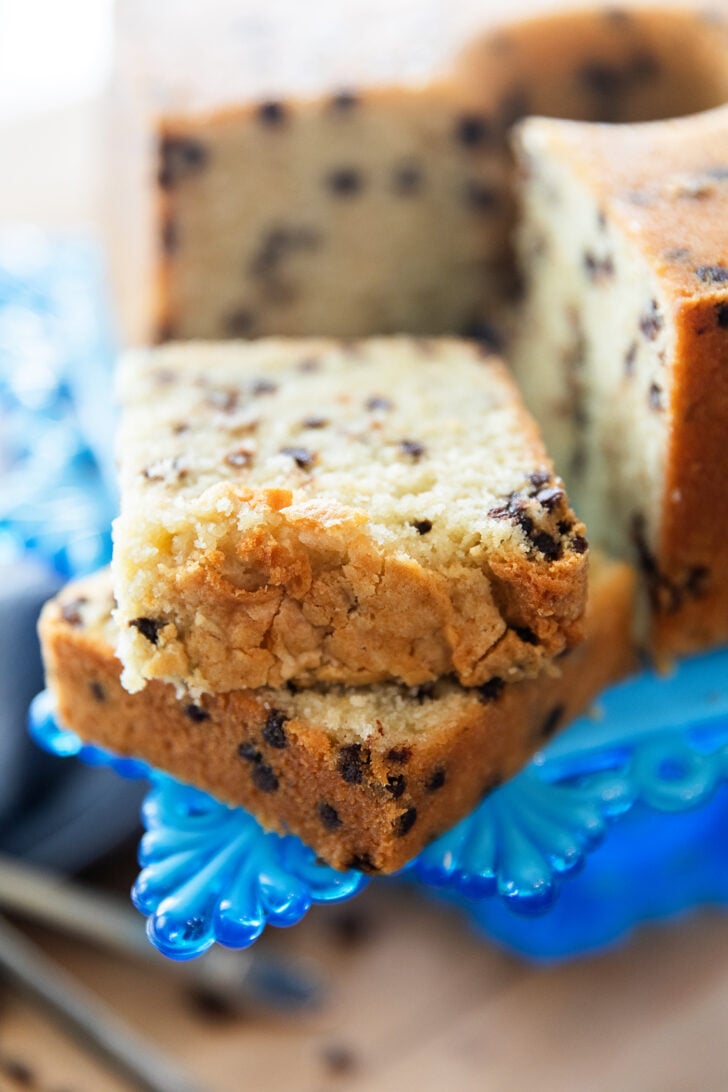
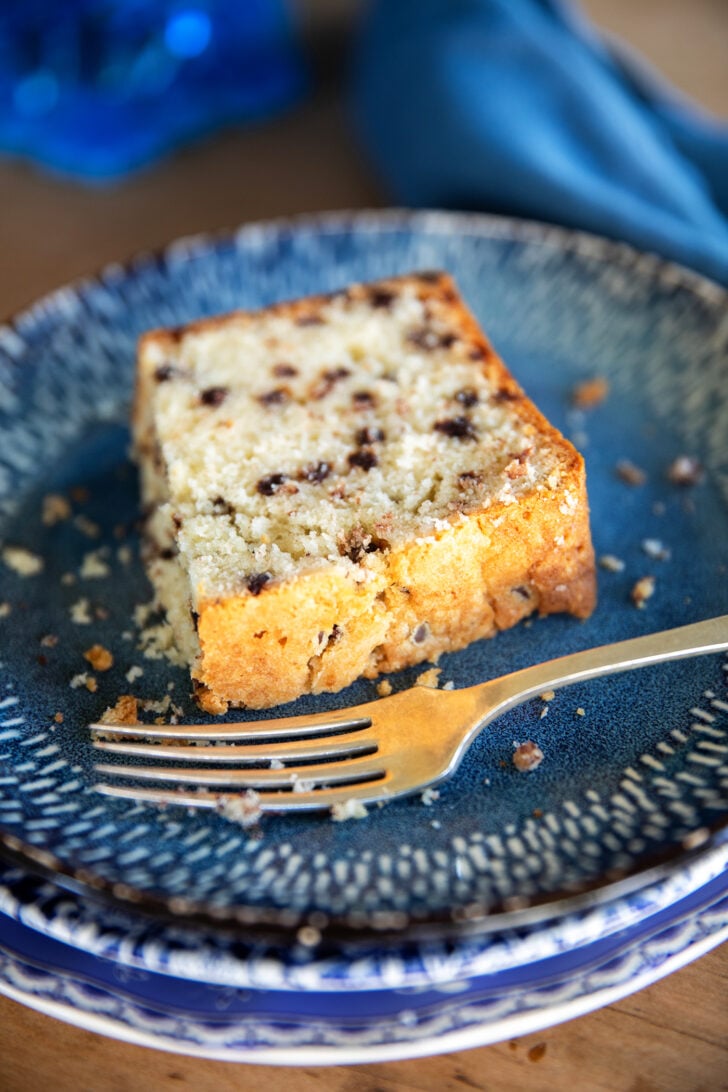
If you’re craving a rich, moist, buttery pound cake with a little something extra, this Chocolate Chip Pound Cake is the answer. It’s my classic buttermilk pound cake with a sweet twist—chocolate chips baked into a buttery, tender crumb. Perfect for Sunday supper, holiday gatherings, or just when the craving hits, it’s sure to be a hit at your house every time.
I always get asked about where my inspiration comes from for new recipes. And honestly, sometimes the best ideas come out of nowhere. Take this Chocolate Chip Pound Cake, for example. One lazy Sunday afternoon, Heather was bored and decided she wanted a chocolate chip pound cake. She grabbed my classic Buttermilk Pound Cake recipe and folded in a bag of mini chocolate chips. The result? Quite possibly one of the best pound cakes I’ve ever eaten.
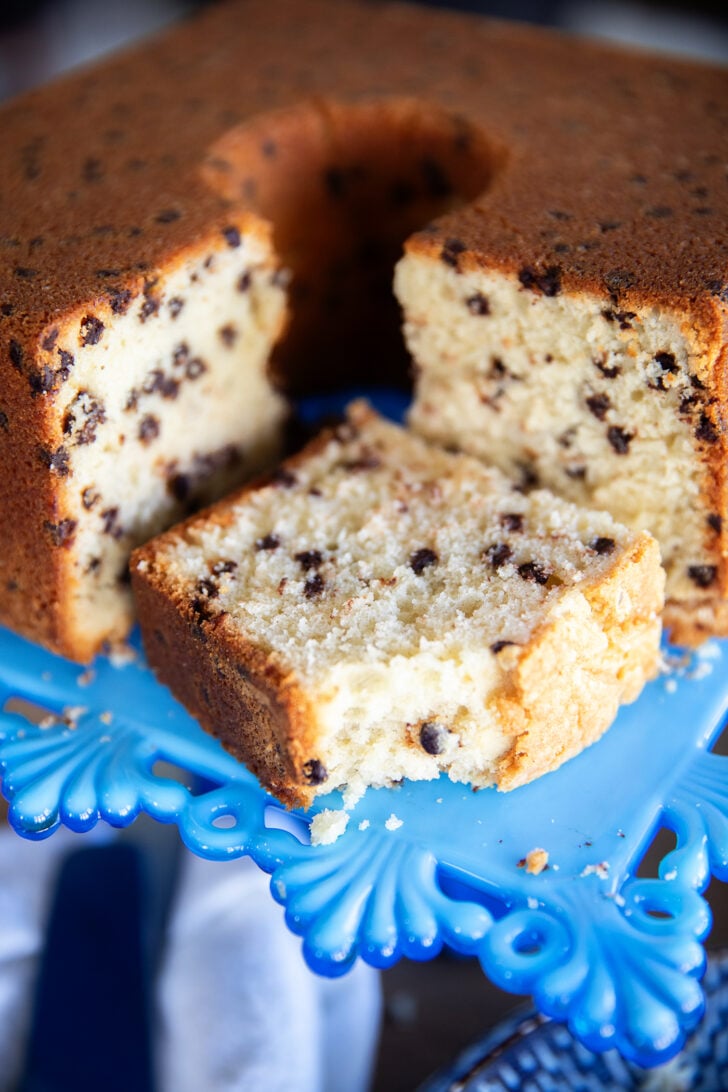
There’s just something about that tender texture dotted with little bursts of chocolate that makes each bite irresistible. And while it feels like a fun twist, it’s every bit as easy as my original.
I use mini chocolate chips here because they distribute more evenly throughout the cake, giving you just the right pop of chocolate in every slice.
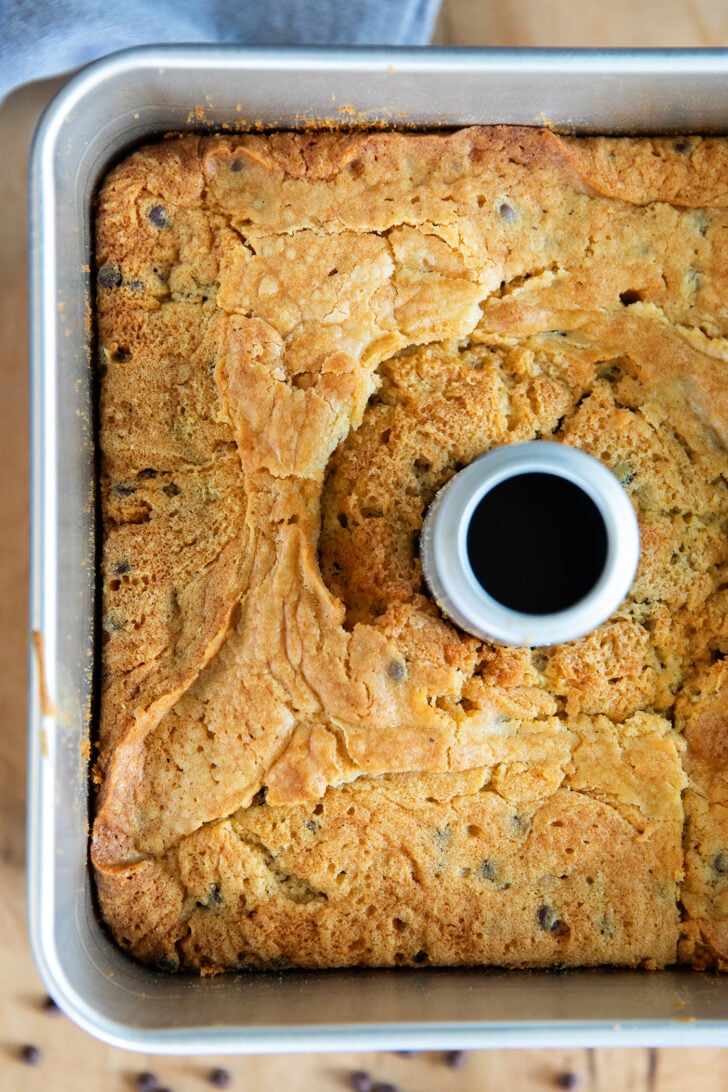
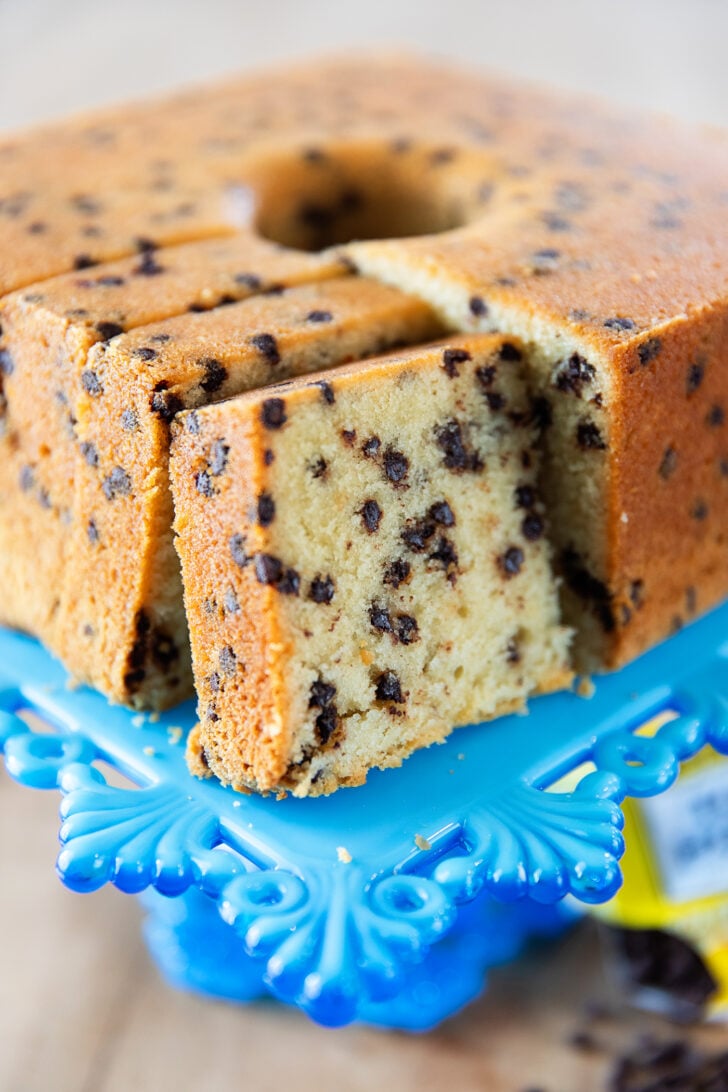
I also tested this cake in my new square tube pan—you know, the vintage-style ones that give such a nostalgic look. Because it’s a light-colored aluminum pan, the bake time ended up being 20 to 25 minutes longer than in my darker nonstick bundt pan. That’s just a reminder that pan choice can really affect how a cake bakes, so always keep an eye on things toward the end.
Tips for the Perfect Pound Cake
Getting a pound cake just right can feel tricky, but it doesn’t have to be. Here are a few tried-and-true tips that will set you up for success:
- Start with room temperature ingredients. Butter, eggs, and buttermilk should all be at room temp. They emulsify better this way, which is just a fancy way of saying they combine more smoothly. Good emulsification is key to a tender, moist cake.
- Cream the butter and sugar thoroughly. Give it a good 5 to 7 minutes until the mixture is pale, fluffy, and almost doubled in volume. This step adds air, which gives the cake its lift.
- Don’t overmix once you add other ingredients. After the eggs, flour, and buttermilk go in, mix only until everything is just combined. Overmixing at this stage can make your cake dense and tough.
- Use mini chocolate chips. Regular chips tend to sink, but minis stay suspended in the batter and give you even chocolate distribution. Tossing them lightly in flour before folding them in helps too.
- Grease and flour your pan well. There’s nothing sadder than a pound cake that won’t come out of the pan. Take your time here.
The Science of Deliciousness
Baking a pound cake isn’t just about following a recipe! There’s some real kitchen science at play that makes all the difference between a ho-hum cake and a real showstopper.
It all starts with emulsification. When your butter, eggs, and buttermilk are at room temperature, they blend together more smoothly. That’s important because fat and liquid don’t naturally want to mix. Room temp ingredients let the butter wrap itself around the liquid molecules, trapping tiny pockets of air. That stable emulsion is what keeps your cake tender, moist, and perfectly textured instead of greasy or dense.
Next is aeration. Beating the butter and sugar until it’s pale and fluffy doesn’t just look pretty. It’s literally whipping air into the mixture. Those little air bubbles expand in the oven, giving your pound cake its height and lightness. Skimp on this step, and you’ll end up with a dense brick instead of a light and fluffy beauty.
Finally, there’s the balance of mixing vs. overmixing. Once the flour goes in, gluten starts to develop. A little gluten gives the cake structure, but too much and you’ve got tough, chewy pound cake. That’s why we cream like crazy at the start, but once the flour and buttermilk are added, we only mix until things are just combined. It’s a delicate dance, but when you nail it, you get that tight, tender crumb that makes a pound cake so irresistible.
A Word About Pans
The pan you use makes a big difference in how your pound cake bakes. Dark nonstick pans tend to brown more quickly and often bake faster, while light-colored aluminum pans reflect heat, leading to longer bake times and a lighter crust. That’s why my cake in the square tube pan took a good bit longer than in my trusty bundt pan.
Pan choice can also affect how easily your cake releases. Nonstick pans can be forgiving, but they still need a good coating of grease and flour. Traditional aluminum pans can give you that beautiful golden crust but sometimes cling a little tighter, so careful prep is key.
Pound Cake Fails (and How to Fix Them)
Even the best bakers have had a pound cake flop or two. Here are a few common issues and what you can do about them:
- Dry or crumbly cake: This usually means it was overbaked. Next time, check for doneness a little earlier, and remember that the cake will continue to cook for a few minutes after it comes out of the oven.
- Dense, heavy cake: Most often this comes from not creaming the butter and sugar enough or from overmixing once the flour is added. Make sure you beat the butter and sugar until light and fluffy, and then take it easy with the mixing once the dry ingredients go in.
- Cake stuck in the pan: Properly greasing and flouring the pan is key. If it still gives you trouble, try using a baking spray with flour included. And always let the cake cool about 10 minutes before turning it out.
- Cake collapsed as it cooled: This one can happen for a few different reasons. Sometimes it’s because the butter and sugar weren’t mixed enough at the creaming stage, so the cake didn’t have the structure it needed. Other times, it’s from overmixing after adding the eggs, which can weaken the structure. When this happens, it often shows up as the cake separating from the top crust as it cools. An oven that runs too hot can also cause the outside to set before the inside is ready, leaving the middle unsupported. And of course, opening the oven door too early can cause a sudden drop in temperature that makes the cake fall. The best fix is prevention: cream the butter and sugar properly, mix carefully once the eggs and flour are in, check your oven temp with a thermometer, and resist the urge to peek until the cake is nearly done.
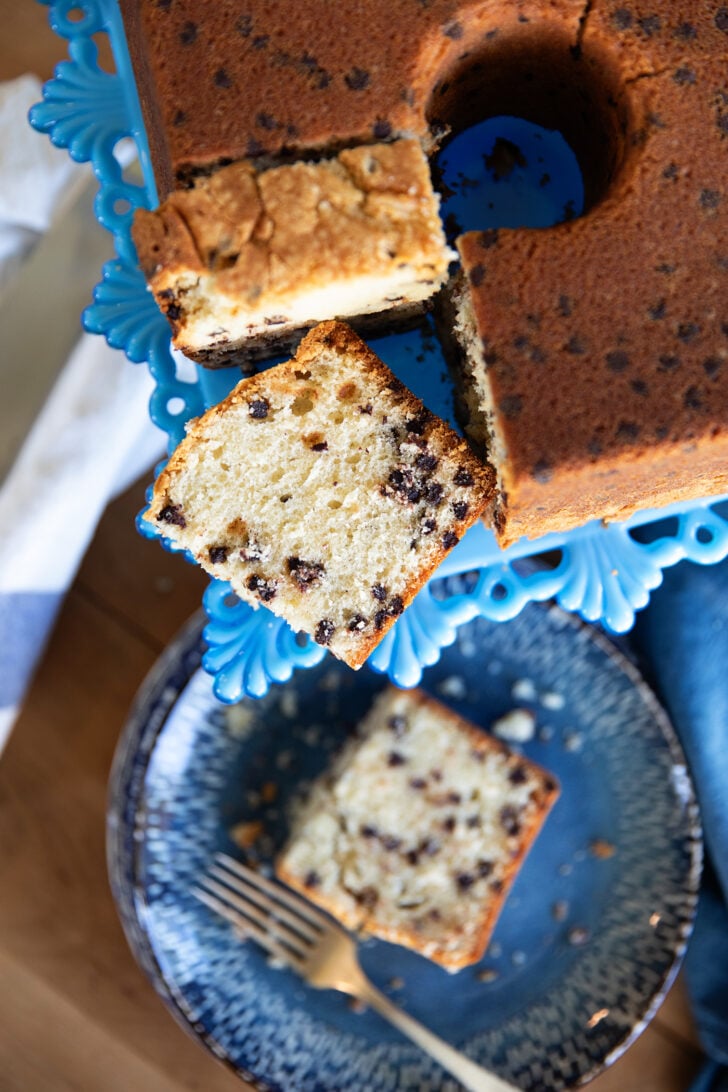
This Chocolate Chip Pound Cake recipe is proof that sometimes the simplest ideas can turn into the most delicious desserts. Between Heather’s inspiration, those little bites of chocolate, and my fun new vintage pan, this one has become a new family favorite.
Ingredients
- 1 ½ cups unsalted butter room temperature
- 2 ½ cups granulated sugar
- 4 large eggs room temperature
- 3 ½ cups all-purpose flour*
- ½ teaspoon salt
- ½ teaspoon baking soda
- 1 cup buttermilk
- 1 (10-ounce) package mini semi-sweet chocolate chips
- 2 teaspoons vanilla extract
- 1 teaspoon almond extract
Instructions
- Preheat the oven to 325°F and grease and flour a 10 to 12-cup bundt or tube pan. Set aside.
- Using a mixer, cream the butter and sugar together until light and fluffy – about 5 minutes. Add the eggs, one at a time, mixing just enough to fully incorporate each egg after adding. Scrape down the sides of the bowl.
- In a medium bowl, whisk the flour, salt, and baking soda together.
- Add the dry ingredients and the buttermilk to the butter mixture, alternately. Start with ⅓ of the dry, then half the milk, another ⅓ of the dry, the other ½ of the milk, then the remaining dry. Mix until well combined. Scrape down the sides of the bowl and mix again.
- Add the chocolate chips, vanilla, and almond extracts and mix to combine.
- Pour the cake batter evenly into the prepared pan. Gently tap the pan on the countertop to force air bubbles to the top of the batter. Bake for 1 hour to 1 hour and 15 minutes, or until a toothpick inserted in the center of the cake comes out clean. Bake times may vary**. Allow the cake to cool in the pan for about 10 minutes, then place a plate or platter over the pan and invert to turn the cake out onto the plate. Allow to cool completely. Slice and serve. Store covered on the counter for a few days or in the refrigerator for longer.
Video

Notes
Nutrition
* If nutritional values are provided, they are an estimate and will vary depending on the brands used. The values do not include optional ingredients or when ingredients are added to taste. If calorie count and other nutritional values are important to you, I recommend grabbing your favorite brands and plugging those ingredients into an online nutritional calculator.
You Might Also Like
Soooo good!! This is going in my recipes to make over and over. I haven’t used the almond extract just using vanilla but still sooo delicious!
Thanks, Carrie! I’m so glad you enjoyed it!
Can you substitute the almond flavor and what would you use?
I’ve never done that, so I can’t say for sure.
Hello Stacey:
Well, you know by now I always decide to mix up your recipes a bit but not to upstage you one bit soooo….. I want to make this pound cake this weekend. The ratio of flour to eggs a nd sugar…. I have always used three cups of flour to three cups of sugar and five or six eggs in most pound cake recipes. I was wondering if I might substitute sour cream for the buttermilk? The butter , of course, is pretty standard .. three sticks. I was thinking of reducing the flour amount by half a cup . Thanks for the suggestions as I love anything chocolate chip. PS… I have got to get that square pan…. it’s awesome!
I appreciate how respectful you are in making adjustments — that’s the fun of baking! You can use sour cream in place of the buttermilk, but the cake will be a bit denser and richer. I’d recommend trying it as written first before cutting back on the flour since that can change the structure more than you’d expect. And yes, that square pan is such a fun one — just remember it usually takes a little longer to bake in it. Can’t wait to hear how yours turns out!
Happy Saturday Stacey:
Thanks for the feedback on my question. I will try your version and let you know the outcome. Enjoy the weekend and always, thanks for great recipes!
Excited to hear how it turns out for you!